Roshan James (she/her) is a Tibetan-Indian poet, interdisciplinary artist, and musician living as a settler in southwestern Ontario. As part of the South Asian diaspora, with a spiritual connection to nature, humanity, and realms of consciousness, she researches, experiments, plays and creates to connect the everyday with timelessness: consciousness, mindfulness, non-attachment, unconditional love, hope, purpose and healing. Entrenched in her work is anti-oppression advocacy to represent marginalized, melanated voices and to dismantle colonial, capitalistic systems that were designed to control and impoverish society. Roshan holds an Honours Bachelor of Arts degree in English Literature from York University, summa cum laude.
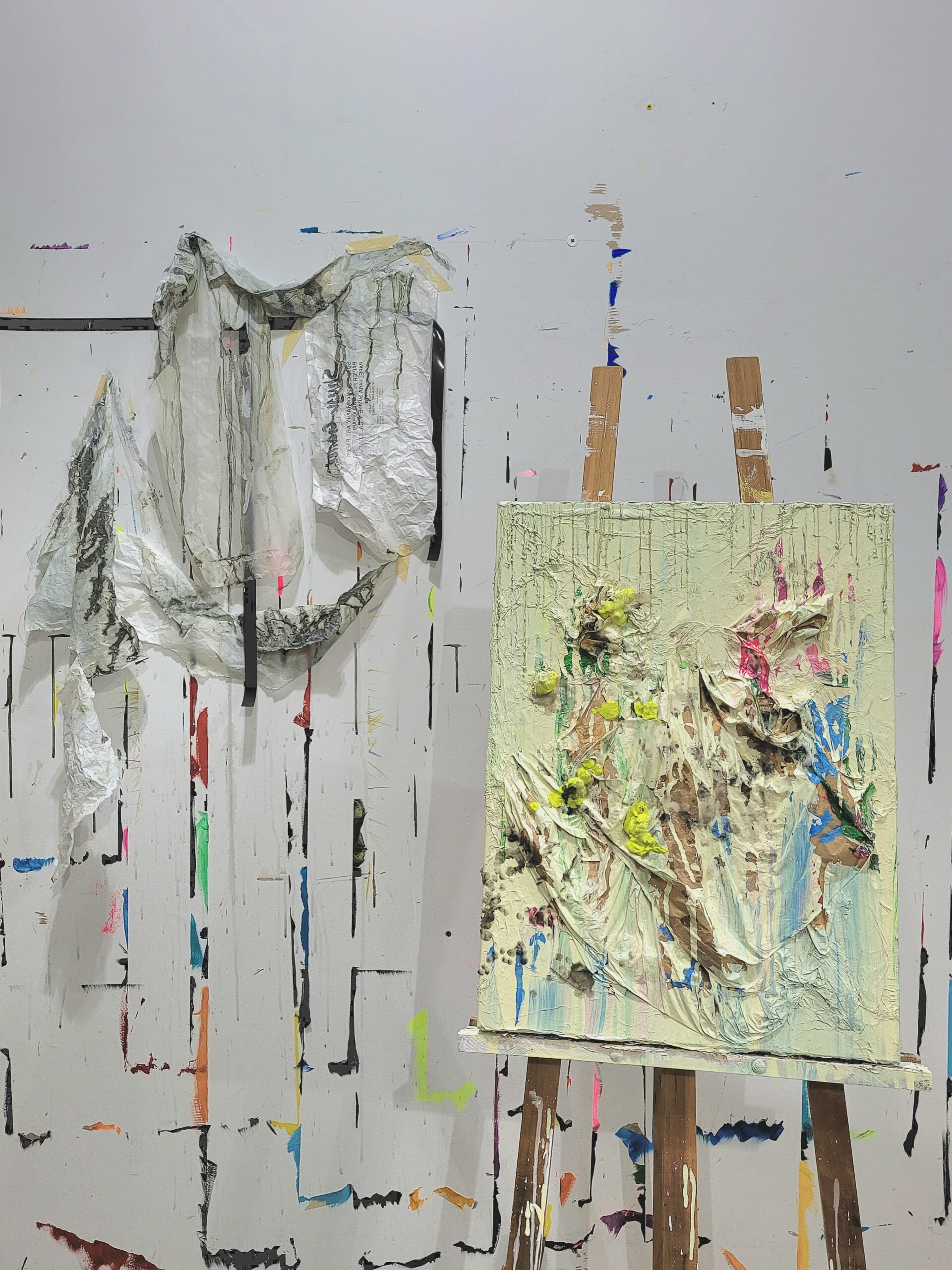
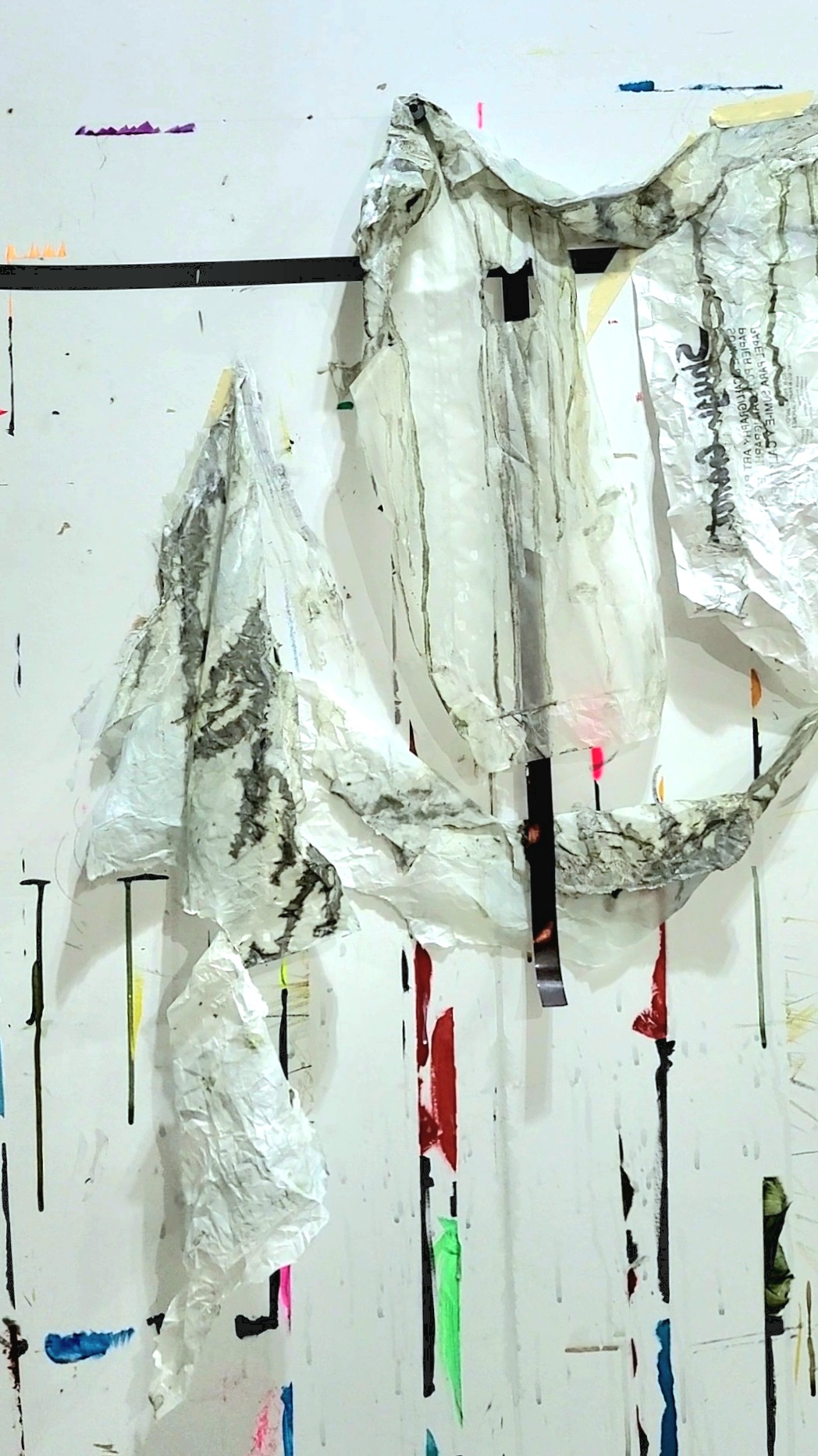
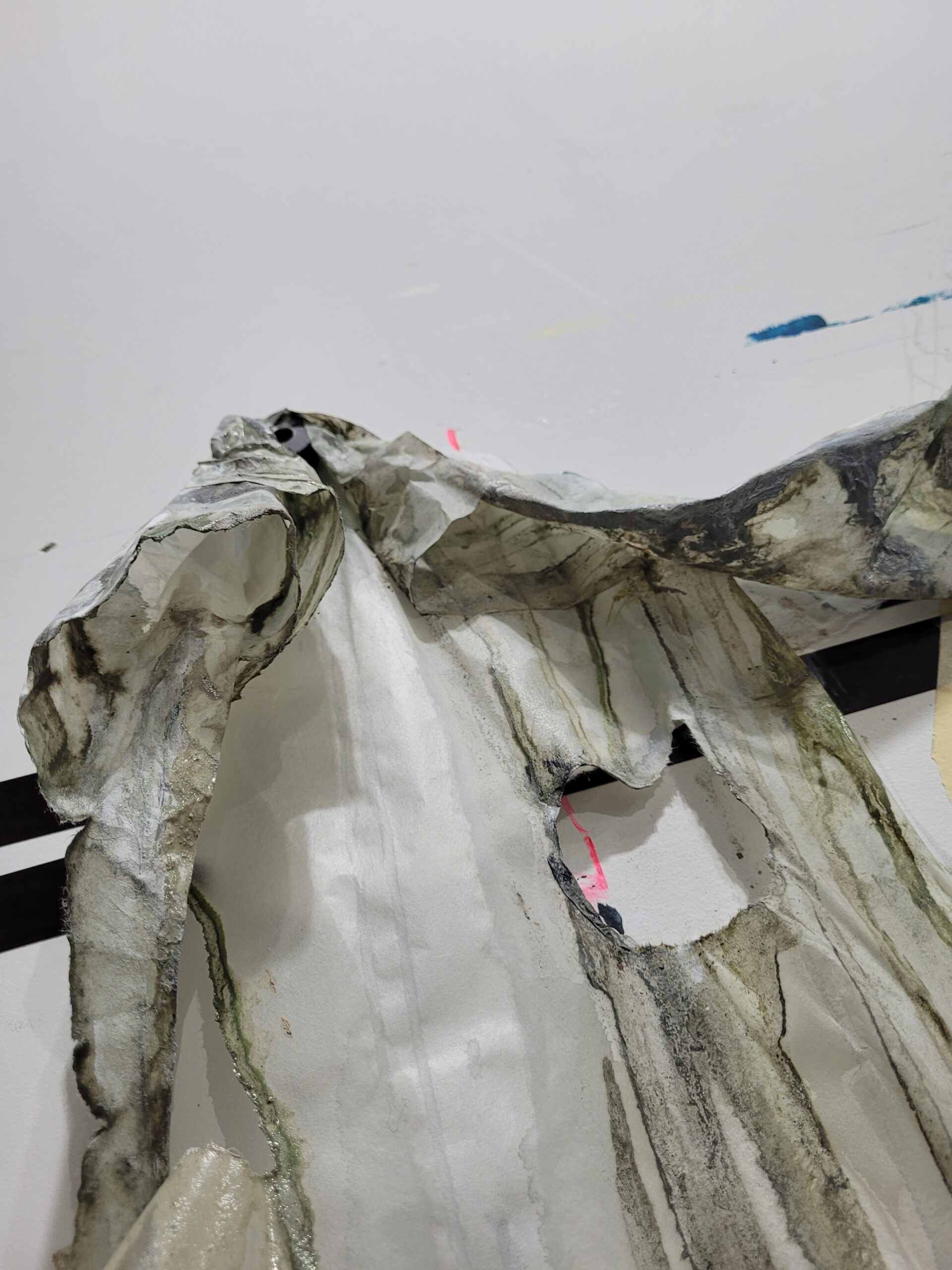
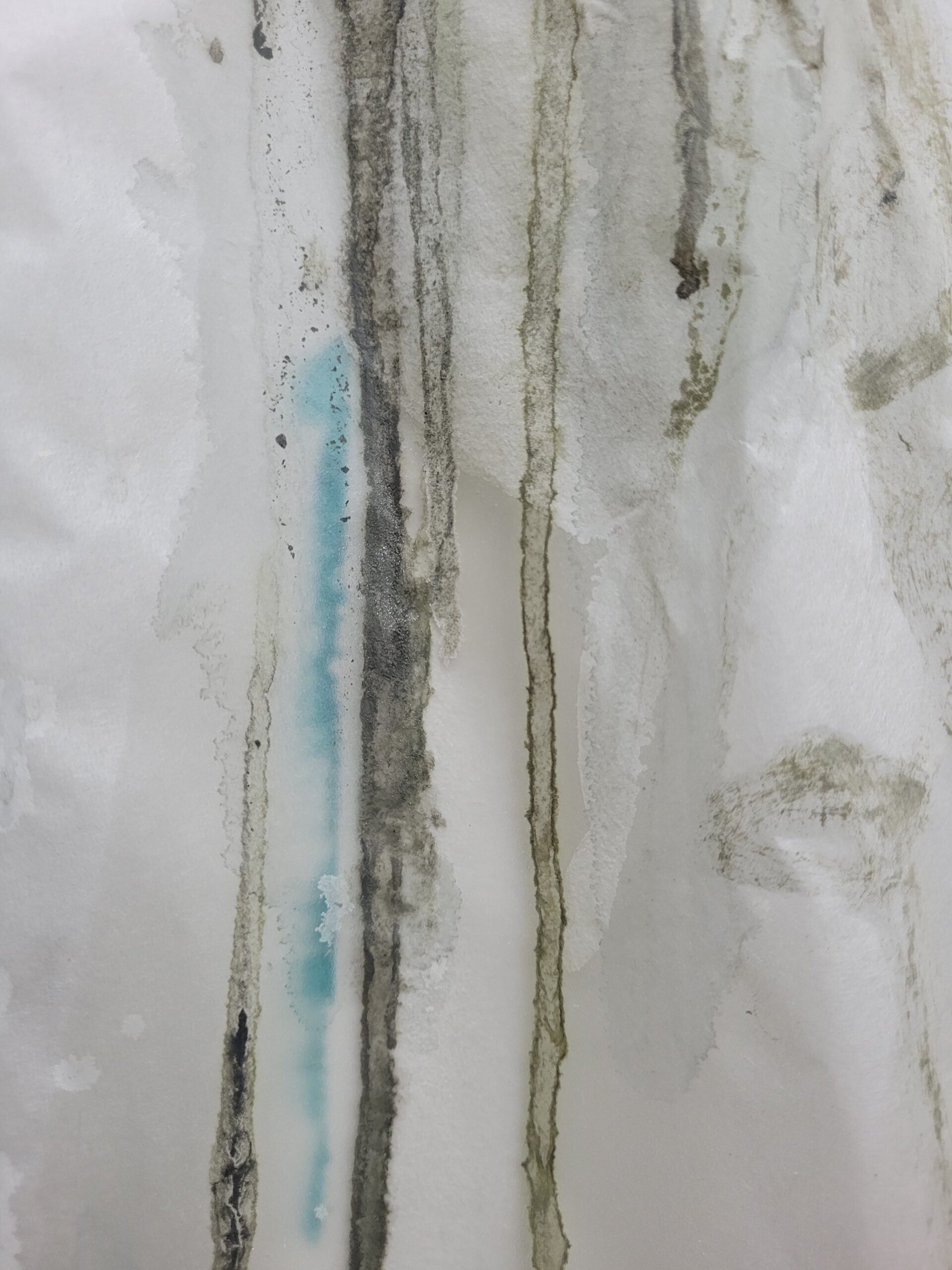
“In this study, I am responding to the Washi 和紙 exhibition (July, 2022, to February, 2023) at the Nikkei National Museum & Cultural Centre in Burnaby, British Columbia, featuring the work of Naoko Matsubara and Alexa Hatanaka. I was fascinated by the simple yet intricate storytelling through the use of washi as cultural material, substrate, and sculpting medium. I also thought about both artists’ practices, timelines, and reasons for expression, and this guided the set-up of my 3-dimensional, two-pronged study using layered drips of oil paint and linseed oil, and acrylic and water, on three different types of washi, with magnetic tape under the layers as a reference to the pull of gravity over time.
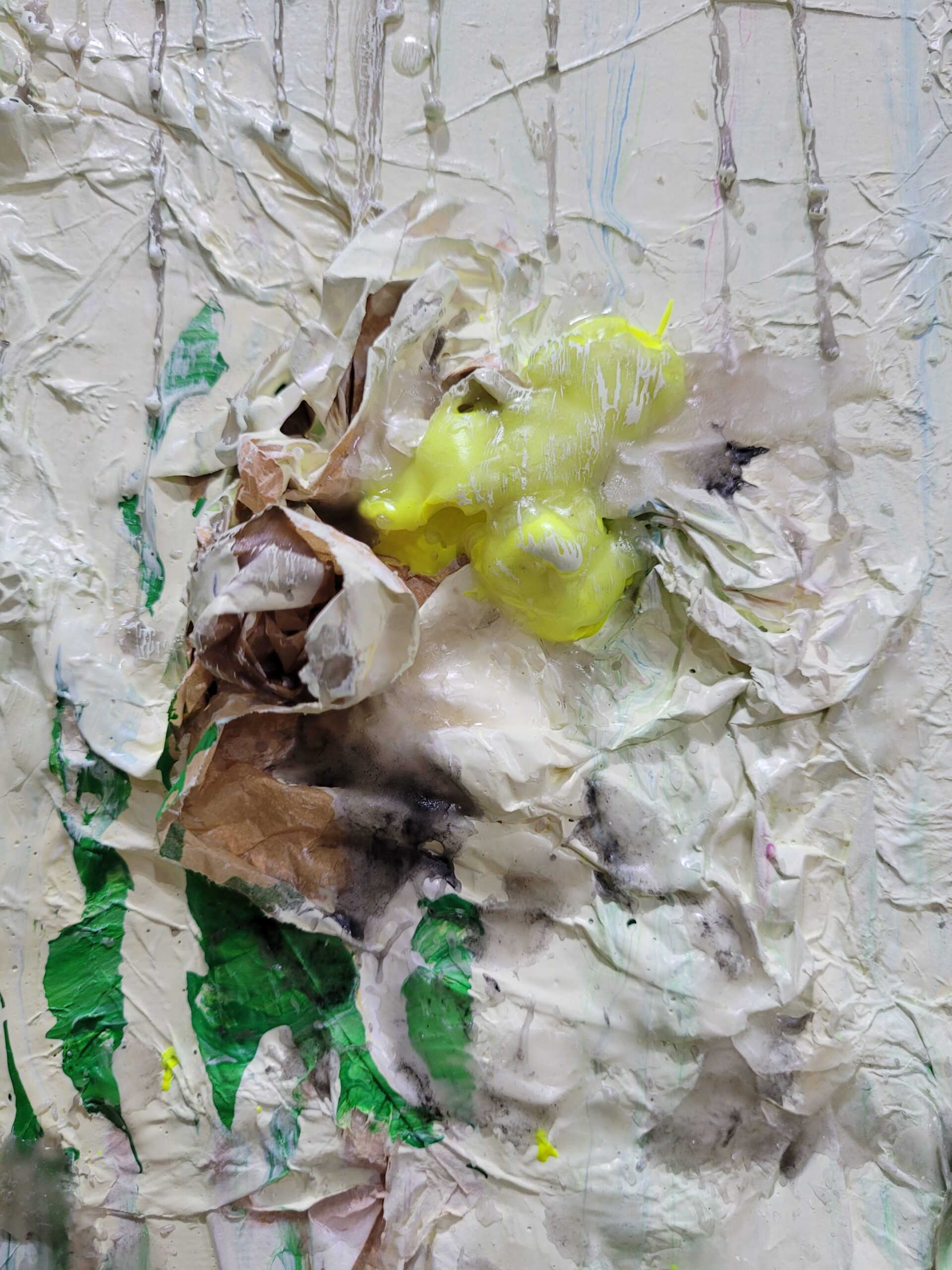
“While the 3-dimensional study dried and went through a transition, I created the mixed media/encaustic part of the study on 18 x 24” stretched canvas using retail tissue paper, acrylic paint and hot wax. My goal was to finish the second art piece while passing time as a parallel to the references to time and material in the Washi 和紙 exhibition.
“Through exploring my own South Asian ancestry this year, I have been using washi in my abstract paintings and installations. I have also thought about the effect of time on narratives, as an influencing and corrosive element to memory and the tracing of lineage. Bringing that into this study, I worked on the experiment over several days, and allowed the art to form based on how the paper responded to each medium, how well the magnetic tape strip held up, and how the tissue, acrylic and wax interacted.
“My maternal grandfather, who taught me how to paint, was Tibetan with connections to what is now considered northern China and Japan, which we know through DNA testing. However, he was adopted by an Irish Missionary family in Kolkata, India. Layers of my ancestry will always be missing due to lost documents, lost language, and lost culture, but I can reclaim my narrative in a similar way that artists Matsubara and Hatanaka connected to their ancestry through artistic process. I plan to continue studying my personal cosmology and mythmaking through a process of deconstruction, decolonizing, and re-imagining.”