Andrew James McKay is a graduate of the honours arts programme at Emily Carr University of Art+Design. In 2019, he became the first student in the history of that institution to be awarded upon graduation the Lieutenant Governor’s Medal for Inclusion, Democracy and Reconciliation. A three-time recipient of grant support from the Elizabeth Greenshields Foundation, his work has been exhibited with Thierry Goldberg Gallery, New York; Monte Vista Projects, Los Angeles; Ground Floor Art Centre, Vancouver; Peter Ohler’s Fine Art, Toronto; and Masters Gallery, Calgary.
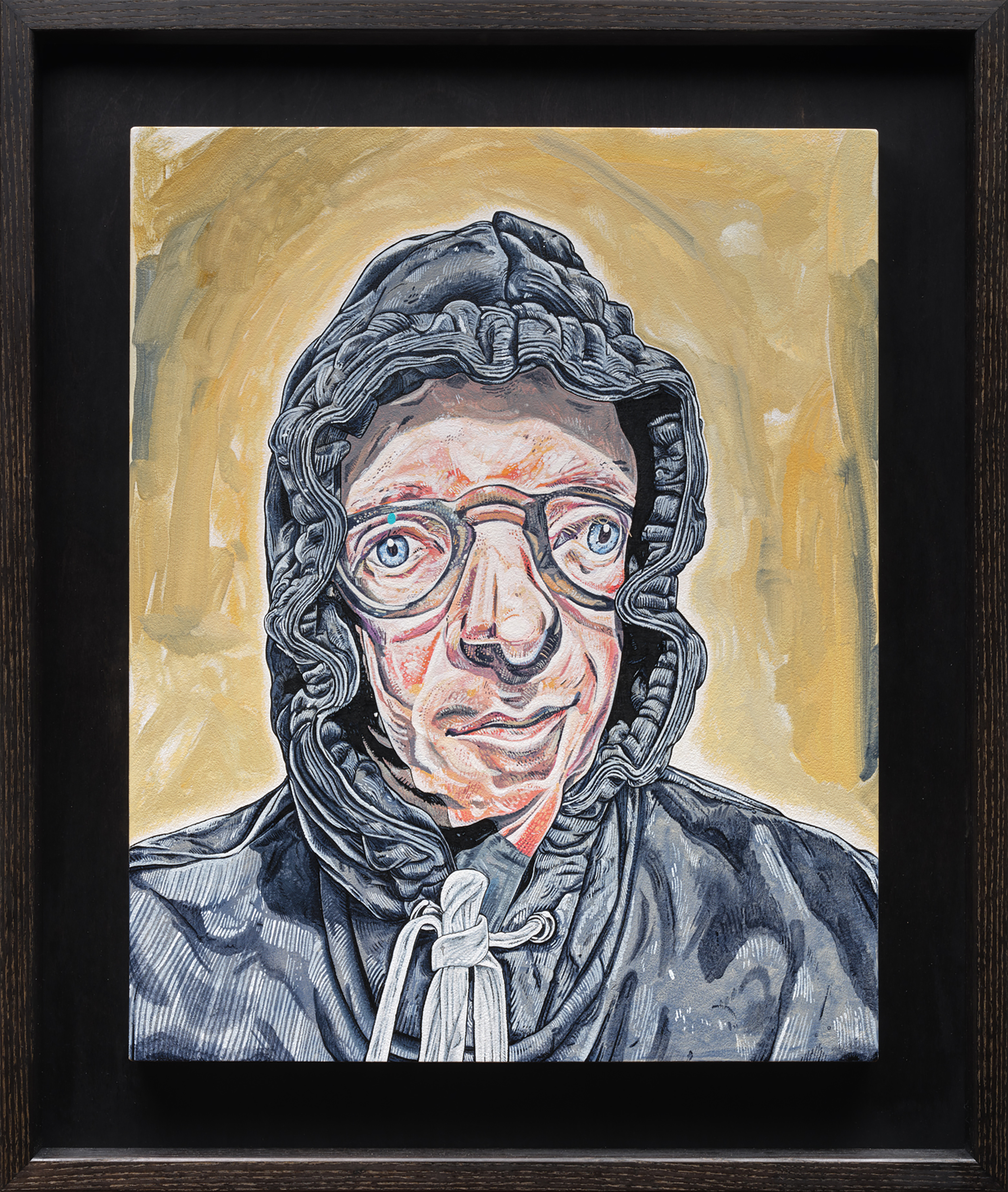
“Advertised with a total absence of concision, the “Personalized Face Mask Add Your Face Photo Halloween Face Mask Customized Bandana Face Mask Reusable Funny Fraud Mask” does manage to eventually indicate the item may be used for fun or fraud. Not unlike many technological innovations—one thinks of the gunpowder used for fireworks prior to it becoming the essential component of the menacing fire lance—this is apparently intended primarily for amusement. However, it’s probable we are more familiar with such items having read news reports of crime involving disguises.
“For the affordable sum of $13.49 (S&H extra), I uploaded a jpeg of my face and not long after received in the post a quite lifelike mask. Should I get another made in the likeness of my enemy and engage in crime? Of course, once the mask was donned, it was unavoidable that a stronger case had been made for amusement: the distortion ensured this.
“I think of this as being at once a true and false self-portrait image, and so in this way: accurate.”
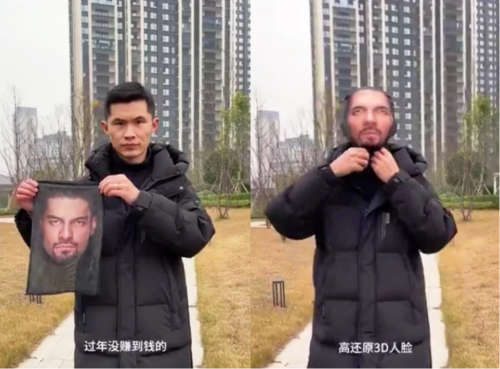
“1: Stills from a video I came across early in my search for information about issues surrounding historical and contemporary mask use. These images are from what I think is a Chinese advert demonstrating the same sort of mask used during the making of the painting in the post ahead of this one. Set in what looks to be a desolate housing estate, the video hints at the unexpected frequency of masks used for race-switching, as below.”
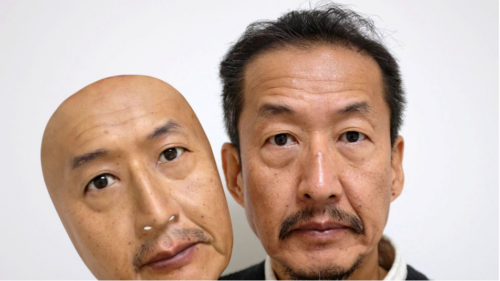
“2: Mr. Osamu Kitagawa, the president of Japan’s REAL-f Co., shows off a hyper-realistic mask available through his company. At a cost of 380000 yen (2600 USD), REAL-f Co. uses a process which hybridizes 3D printing to create the masks’ shapes, and 2D printing to impart life-like colours, including remarkable details such as blood vessels, irises and pores. Info/inquiries: real-f.jp/en_news.html.”
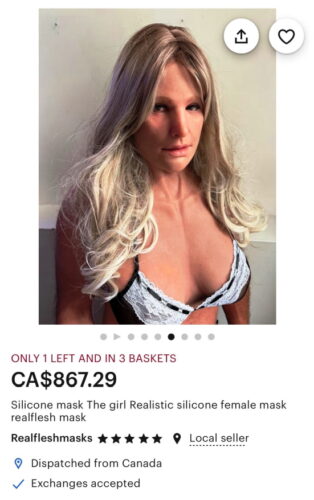
“3: The Ron Mueck x Protective Custody limited edition mask (?) available through five-star vendor Real Flesh Masks.”
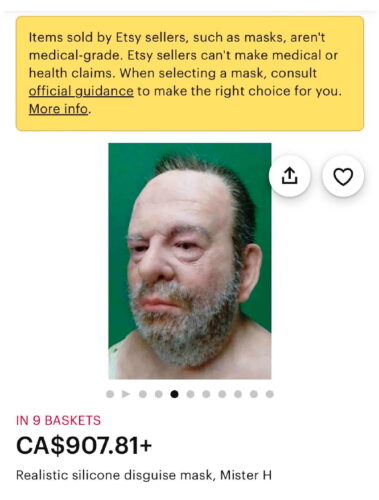
“4: For real perverts only: the ‘Mister H’ mask. Highly suitable for all Miramax/TWC casting couch scenarios, say the reviews. No free promo for the business selling this nasty bit of work, you’ll have to look it up yourselves. Use a VPN.”
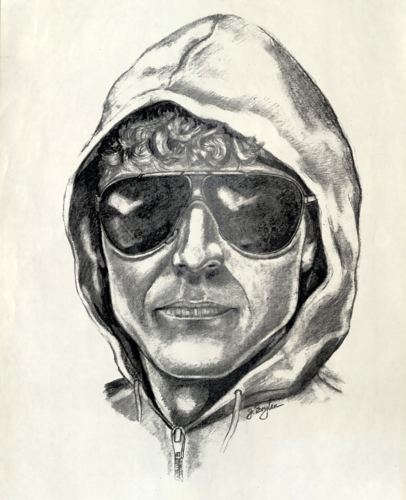
“5: Jeanne Boylan’s 1994 Unabomber sketch, commissioned by the FBI after a witness insisted that Robert Exter’s 1987 sketch of the elusive suspect be revised. From thetedkarchive.com:
Jeanne Boylan’s drawing of the Unabomber did not lead to Kaczynski’s capture. The sketch did have an impact on the Unabomber himself. Allegedly, the image inspired Kaczynski to break his own nose in order to alter his appearance.”
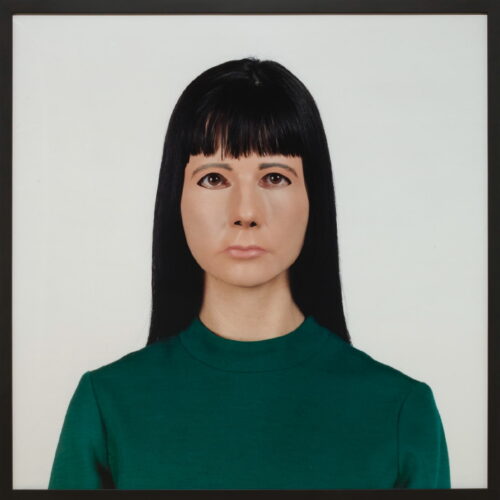
“6: Gillian Wearing’s Self-Portrait (2000). Photograph mounted on 67.7 by 67.7 inch aluminium. Alongside Claude Cahun and Cindy Sherman, arguably one of the leaders of mask imagery as it relates to issues of identity. Wearing, on this work, from a 2011 Border Crossings Magazine interview with Robert Enright:
You think you know what you’re looking at but you don’t. I think the Self-Portrait with the mask works quite well because I managed to make my hair look quite wig-like, and from a distance, because the colouring of the mask is very similar to my neck, you think it[‘s] a face with a blank expression. It’s quite enigmatic as an image.”
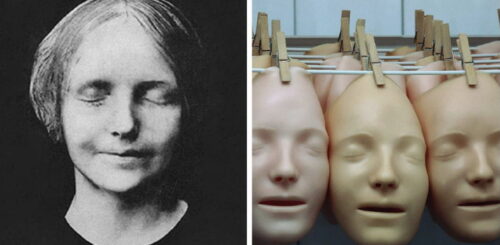
“7: Used in CPR training, the ‘Resusci Anne’ debuted in 1960 at the First International Symposium on Resuscitation held in Stavanger, Norway. Designed by toymaker, Åsmund S. Lærdal, a woman’s face was selected to fashion the practice dummy because it was thought men being taught to perform life-saving care would show a reluctance to kiss a man’s face. The model for the cast was L’Inconnue de la Seine, a death mask made from a woman—perhaps as young as 16—fished from the Seine in 1880, a suspected suicide.”
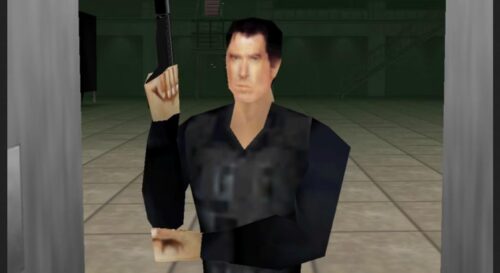
“8: A depiction of Pierce Brosnan as James Bond from Nintendo’s 1997, GoldenEye 007. A top-seller for the N64, seeing north of eight million units sold, the game grossed 250 million dollars (or just about 70% of the box office of the film itself). Something of a devil’s deal aesthetically-speaking, the game featured graphics considered groundbreaking in those days, graphics which would go on to provide the nostalgia-laden basis for the ‘airbrush artists’ of the contemporary period.”
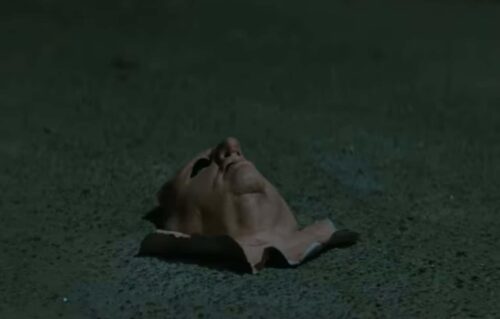
“9: An image from 1993’s Mrs. Doubtfire, in which Robin Williams’s granny mask falls into the street, is unceremoniously run over by a garbage truck, and emits an audible, ‘OUGH!’ Designed by Oscar-winning Greg Cannom (1951-2025), the actual mask Williams wore for the film consisted of eight separate pieces and took more than four hours to apply. Even after more than thirty years and changing social attitudes in some quarters towards the film’s subject matter, I can say it still holds up.”
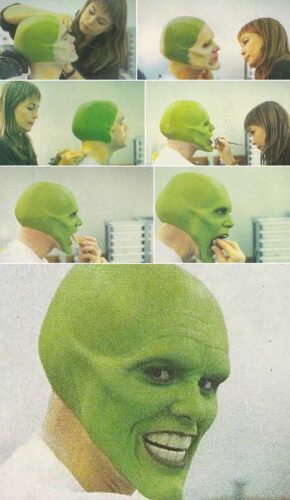
“10: Stills from the application of the face paint and prosthetics Jim Carrey donned for 1994’s The Mask. One of three mega-hits for the actor that year—alongside Ace Ventura and Dumb and Dumber—Carrey soon saw himself vaulted into stardom. A condition which (considering his esoteric comments on red carpets and late-night TV appearances in the years to come) ironically saw the actor seemingly wrestling with his own sense of reality, rendering him perhaps at points unable to determine what was ‘himself’ and what was ‘the character.'”
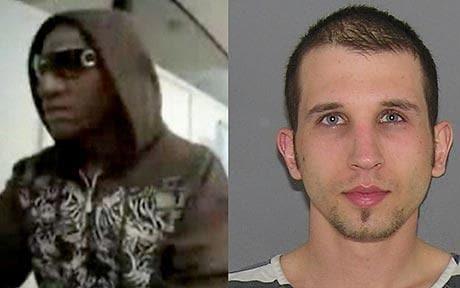
“11: In 2010, Conrad Zdzierak robbed four Cincinnati banks, a credit union, and a CVS—all while wearing an elaborate disguise giving him the appearance of a black man. Said man, whose visage provided the unauthorized basis for this disguise, was identified by both the victims and his own mother(!), and held by Hamilton County authorities until the true culprit was caught. Zdzierak, prisoner number A645938, is set to be released from Marion Correctional in 2035, at which time he is expected to be deported back to his native Poland.”
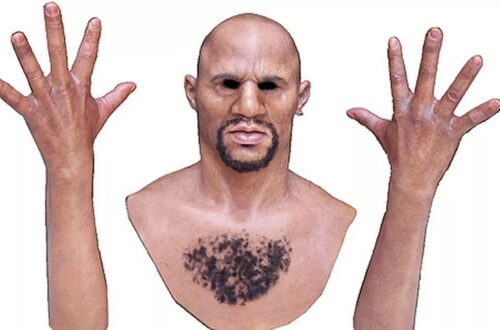
“12: A mask, similar to that which Conrad Zdzierak used in the aforementioned robbery, produced by California-based SPFX Masks. SPFX Masks owner, Rusty Slusser, on the incident:
We’re proud of the fact that our masks look real, but I’m not proud of the way they were used. We’re very embarrassed this has happened. We were shocked that this happened.”
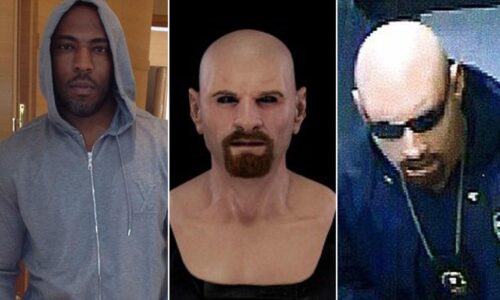
“13: In the interest of racial equity: Edward Byam, Akeem Monsalvatge, and Derrick Dunkley committed in 2012 a crime similar to that of Zdzierak—the robbery of a Queens, NY check-cashing store using masks from CFX Masks—and were subsequently given a mandatory minimum of 32 years. (Despite being Democrat-led since 1988, NY State politics have yet to see significant sentencing reforms.)”
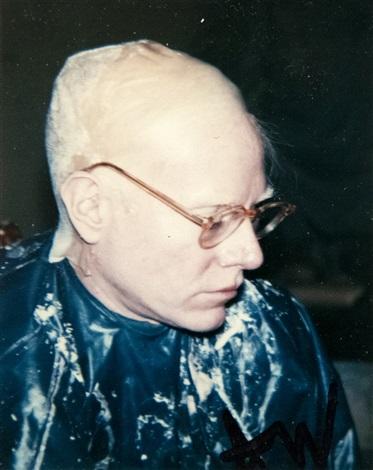
“14: Andy Warhol’s Self Portrait with Mask (c. 1975). 4.25” by 3.375” colour Polaroid.”
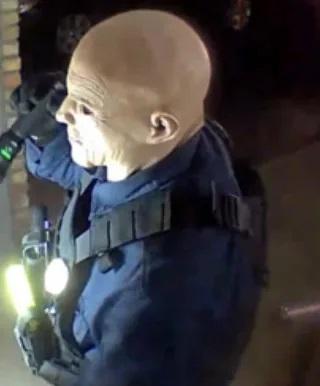
“15: Weirdly reminiscent of the Warhol, an image used in an FBI handout during the hunt for Vance Luther Boelter, the June 2025 assassin of Minnesota State Representative Melissa Hortman and her husband, Mark, and attempted assassin of Minnesota Senator John A. Hoffman and his wife, Yvette. Indicted 15 July 2025 by a federal grand jury on six counts including murder, stalking and firearms violations, if found guilty, Boelter may face the death penalty.”
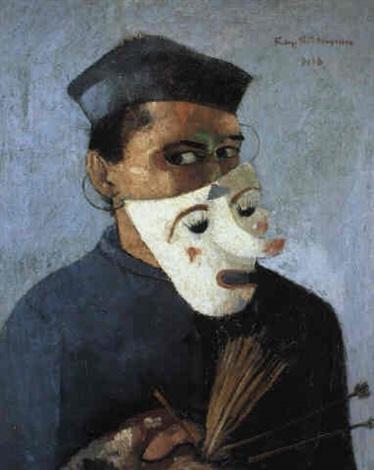
“16: Felix Nussbaum’s Self-portrait with a mask (1928). Oil on 24.4″ by 19.9″ canvas. Briefly held by Belgian authorities in 1940 following Germany’s invasion of that country, Nussbaum not unexpectedly faced increasing pressure as a Jew. Following the 28 May 1942 “Jewish Badge Decree,” a scenario arose for the artist that no mask would serve to ameliorate. After being released and going into hiding for a time, he was denounced on 20 June 1944; Nussbaum would die that year, at age 39, in Auschwitz.”
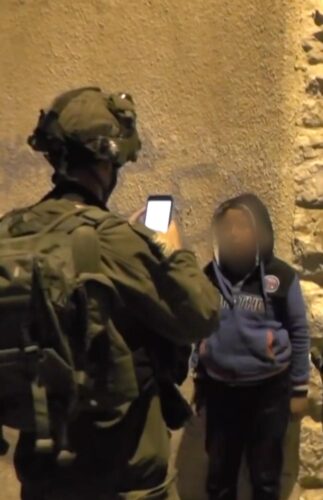
“17: 56 years after Nussbaum’s death, Israel activates MABAT 2000, a comprehensive CCTV surveillance system, marking the start of an automated facial recognition programme. Twemty years later, Israel uses MABAT 2000 data to initiate ‘Red Wolf,’ a colour-coded system used at biometric checkpoints wherein Palestinians are, in real-time, graded green, yellow, or red, thus determining their ability to pass through said checkpoints. Roughly concurrently, phone app ‘Blue Wolf’ activates, allowing IDF soldiers to actively document—and add to the Red Wolf database—the faces of those they encounter who may have provided incomplete data to MABAT. A 2021 Washington Post article, ‘Israel escalates surveillance of Palestinians with facial recognition program in West Bank,’ reports the gamification of this latter aspect, ‘with prizes for the most pictures collected by each [IDF] unit.’ With the advance of consolidated facial recognition and database technologies, and the likely spread of such technologies outside ‘control zones,’ it remains uncertain what options will exist in the future for maintaining individual privacy/data integrity.”

“18: In 2018, German activist group Peng! Collective utilized photo-morphing technology to legally obtain a passport bearing a synthesized image of one of their members and EU Commissioner for foreign affairs and security policy, Federica Mogherini. Further iterations involved the merging of German and Libyan artists’ faces together in order to obtain additional passports as a critique of the EU’s position on the refugee crisis. In June of 2020, the German state outlawed the morphing of passport photos, requiring that all photography to be used for such documentation be issued either directly by a state office, or securely transmitted digitally (read: traceably) from a photographer.”
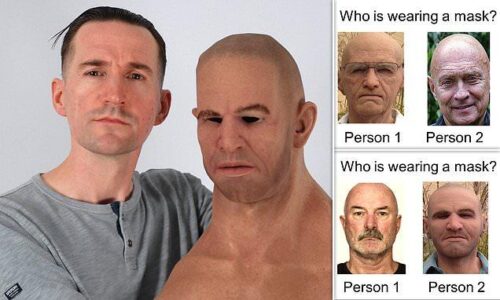
“19: At left: Dr. Rob Jenkins of the University of York holding a silicone mask (photograph by Paul Shields). At right: what I would assume are examples of the test material used in Jenkins’s research (masks again by Real Flesh Masks). In 2019, Dr. Jenkins co-authored the paper, ‘Hyper-realistic face masks: a new challenge in person identification,’ which noted a staggering lack of ability on the part of many participants involved to discern between actual human faces and silicone facsimiles, either in photographs or when presented with real-life masked individuals. With the rapid advance of mask technology over the last half-decade, one suspects our acuity has failed to keep pace with these meagre rates.”
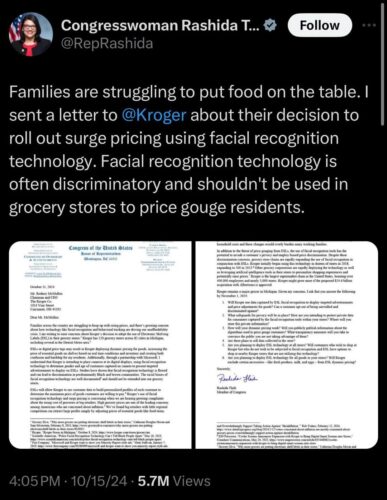
“20: A screenshot of a 2024 Tweet published by Congresswoman Rashida Tlaib, including the letter she sent to Kroger Chair and CEO, Rodney McMullen, regarding his grocery firm’s existing use of facial recognition cameras in-store in conjunction with their decision to adopt the use of Electronic Shelving Labels. Congresswoman Tlaib’s concern (and the Electronic Privacy Information Centre’s concern) is that such systems will facilitate surge pricing on the front-end, and may impact back-end factors to do with consumer choices. I.e., if you purchase ‘unhealthy’ foods, your insurance rates and access to healthcare may be negatively affected. Current laws in the US and Canada remain ambiguous about the wearing of identity-obscuring masks while doing the weekly shopping, but given the rise of flash mob robberies (a 2023 article by Allie Falk for, Loss Prevention Magazine, quotes a National Retail Federation statistic that flash mob robberies now account for a $700,000 loss for every $1 billion in sales) it’s conceivable that such practices will see prohibitive legislation in years to come.